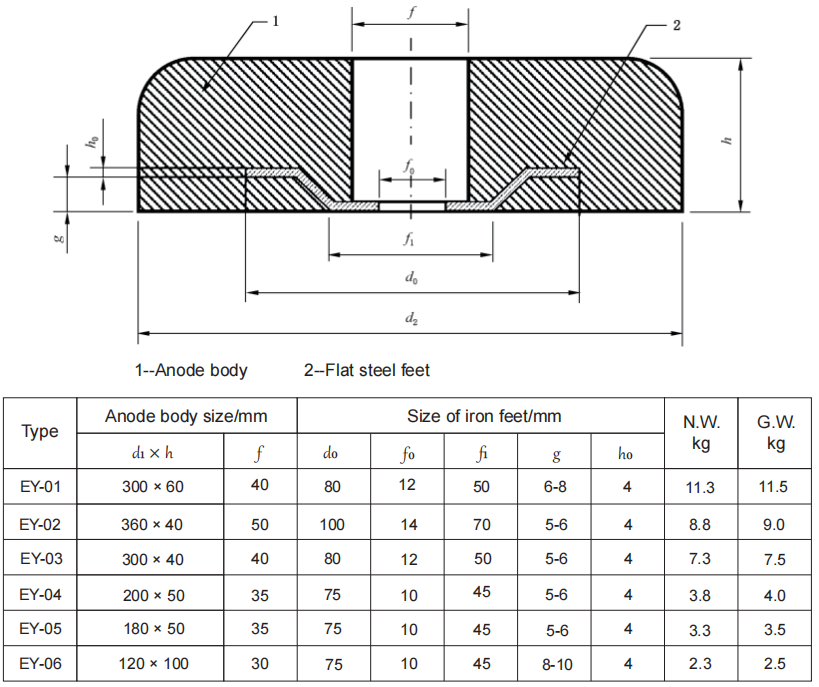



Aluminum Anode for Seawater Cooling Water Systems (Al–Zn–In series) utilizes seawater as a strong electrolyte, allowing the more negative aluminum anode to form a galvanic couple with the protected carbon steel/copper alloy piping, valves, pump casings, heat exchanger water chambers, etc.
Aluminum Anode for Seawater Cooling Water Systems (Al–Zn–In series) utilizes seawater as a strong electrolyte, allowing the more negative aluminum anode to form a galvanic couple with the protected carbon steel/copper alloy piping, valves, pump casings, heat exchanger water chambers, etc. The aluminum dissolves preferentially (sacrificial), continuously delivering protective current to the steel/copper surface, shifting the potential into a safe range (for steel, typically ≤ –0.80 to –0.85 V vs Ag/AgCl/seawater), thereby suppressing uniform corrosion, crevice corrosion, and localized pitting under deposits.
It is widely used in coastal power plants, refineries/terminals, LNG facilities, naval vessels, and other open-intake or semi-closed seawater cooling circuits, applied to inlet straight pipes, elbows, gate valve bodies/seats, expansion joints, strainer housings, bellows, etc. Typically installed as small bolted anode blocks or clamp-type short anodes for easy inspection and replacement, and favored for its high electric capacity and light weight, which are more friendly to vibration and support loads.
KEY FEATURES
APPLICATIONS
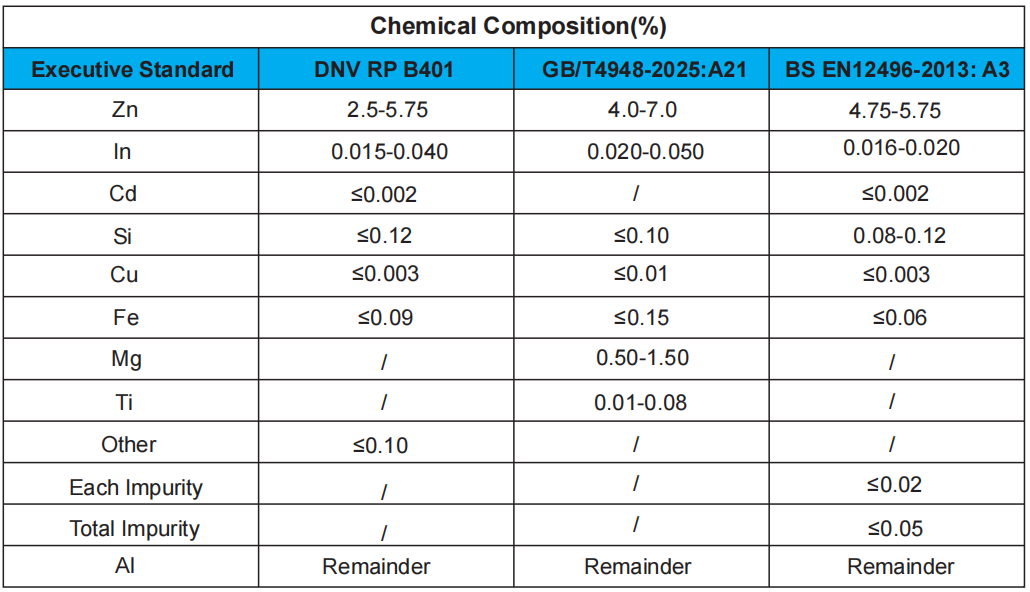
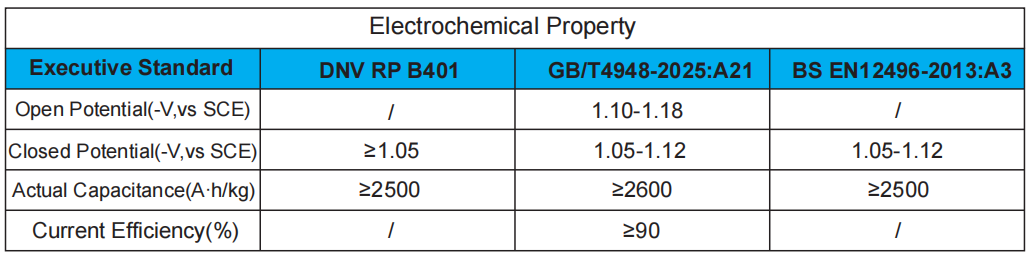
SPECIFICATIONS
PRODUCT GUIDE