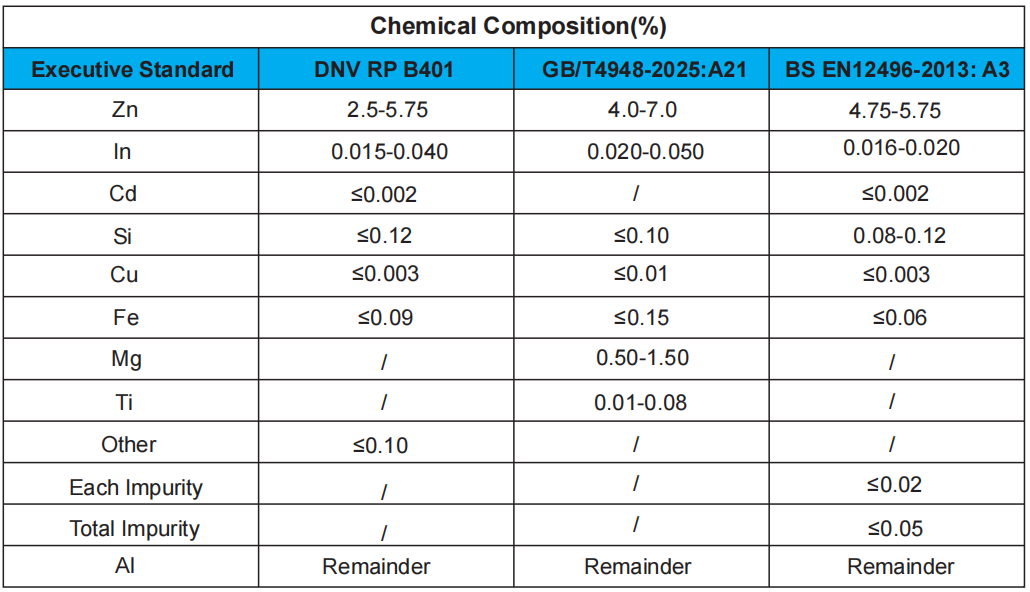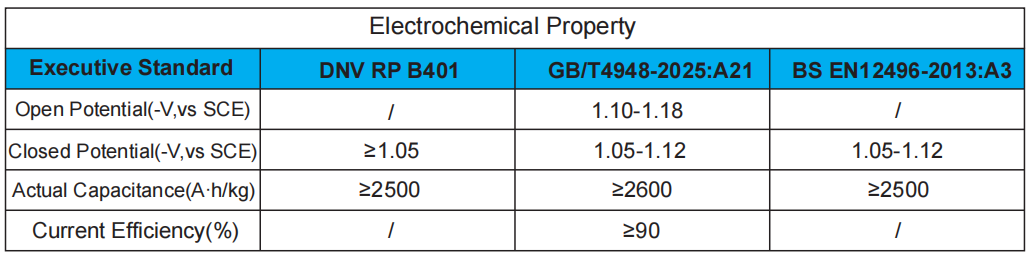



Aluminum string anodes consist of multiple Al-Zn-In series aluminum alloy sacrificial anodes connected in series via a steel core, forming flexible or semi-rigid assemblies. They are typically installed as bracelet-type or string-type wraparound units around subsea pipelines, risers, or platform legs. The working principle is based on the galvanic cell effect: the aluminum alloy has a more negative potential (approx. -1.10 to -1.18 V vs SCE), causing it to preferentially dissolve in seawater while continuously releasing electrons to the protected steel structure, polarizing it to a corrosion-resistant potential below -0.85 V. Aluminum string anodes are widely used for full-lifecycle cathodic protection of subsea oil and gas pipelines, particularly suited for long-distance pipelines, bends, flanges, and other irregular geometries, offering the advantages of convenient installation, uniform current distribution, and no requirement for an external power source.
KEY FUTUERS
APPLICATIONS
SPECIFICATIONS