


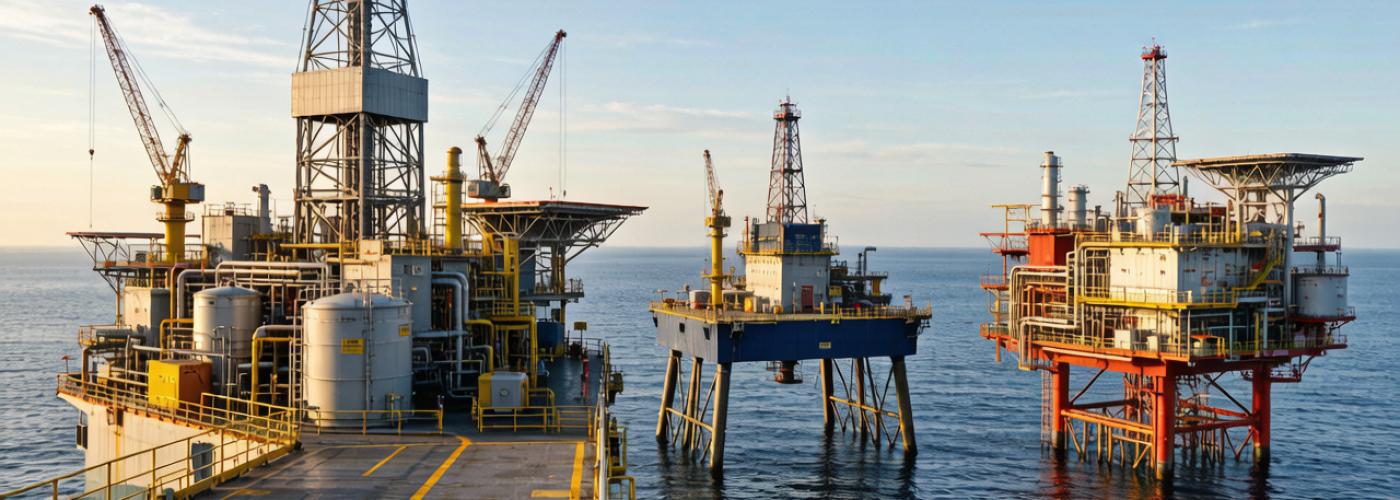
As humanity accelerates its exploration and development of the oceans, "national heavyweights" such as offshore platforms, sea-crossing bridges, and deep-water wharves are facing severe tests from harsh service environments. Chloride ion penetration in seawater, wet-dry cycling in the tidal splash zone, marine biofouling, and complex stress coupling make corrosion the greatest "invisible killer" of this infrastructure. Global direct economic losses due to corrosion are estimated to be in the trillions of dollars annually. In marine engineering, anti-corrosion is not merely a financial calculation; it is a lifeline concerning safety and structural longevity.
I. Current Status: From "Passive Defense" to "Active Immunity"
Today, the anti-corrosion system for marine engineering is relatively mature, forming a pattern of "integrated management."
At the material source, high-performance concrete remains the mainstream. By incorporating mineral admixtures such as fly ash and slag and optimizing mix ratios to increase density, the intrusion of chloride ions is effectively blocked. Steel structures widely adopt heavy-duty anti-corrosion coating systems, such as epoxy zinc-rich primers and polyurethane topcoats. Particularly in recent years, the application of graphene-modified coatings has significantly improved the shielding performance and abrasion resistance of the layers.
In terms of structural protection, Cathodic Protection (CP) technology has evolved from an "optional add-on" in its early days to a "standard feature." For newly built large bridge foundations and offshore drilling platforms, Impressed Current Cathodic Protection (ICCP) systems are widely pre-embedded. Mixed Metal Oxide (MMO) titanium mesh anodes have largely replaced traditional scrap steel anodes due to their long service life and uniform current distribution. Meanwhile, the combined protection mode of "sacrificial anodes + coatings" continues to dominate in the repair of wharf steel pipe piles and aging platforms.
In inspection and maintenance, digital means are intervening. Traditional visual observation, hammer testing, and ultrasonic thickness measurement are transitioning toward automation. Drone inspections, wall-climbing robots, and long-term health monitoring systems based on acoustic emission and fiber Bragg gratings allow engineers to grasp the structural "pulse" in real-time.
II. Pain Points: Lifecycle Challenges
Despite rapid technological advancements, current anti-corrosion engineering still faces severe challenges.
First is coating failure in high-humidity, high-salinity environments. In the splash zone, intense ultraviolet radiation and frequent wet-dry cycles cause organic coatings to age and peel rapidly, leading to swift corrosion of the steel structure. Second is the blind spot in cathodic protection. For complex node structures (such as inside steel boxes or at jacket connections), the current shielding effect often results in inadequate protection. Furthermore, maintenance costs are extremely high; many sea-crossing bridges were designed without sufficient consideration for the accessibility required for later maintenance, meaning subsequent repairs often necessitate road closures and scaffolding, incurring massive expenses.
III. Outlook: Greenification, Intelligence, and Longevity
Looking ahead, marine engineering anti-corrosion will leap forward in three directions.
First, green and long-life materials. With tightening environmental regulations, solvent-free, water-based, and high-solid environmentally friendly coatings will completely replace traditional coatings containing Volatile Organic Compounds (VOCs). Simultaneously, bionic super-hydrophobic coatings and self-healing microcapsule coatings will become research hotspots. Like skin, they can automatically heal micro-cracks, achieving true "maintenance-free" status.
Second, intelligent monitoring and digital twins. Future anti-corrosion systems will be "thinking" systems. By embedding smart sensors and combining them with AI algorithms, systems will not only monitor potential and current but also predict remaining service life. Based on digital twin technology, engineers will be able to simulate corrosion rates under different marine environments in virtual space to formulate intervention strategies in advance.
Third, energy self-sufficient technology. For deep-sea platforms far from the coast and isolated island bridges, cathodic protection systems driven by solar and wave energy will become a trend. This "taken from the sea, used for the sea" self-powered model will greatly reduce operational difficulty and carbon emissions.
Conclusion
Anti-corrosion for marine engineering is a marathon with no finish line. From passive repair to active prevention, and then to intelligent prediction, technological progress is dressing these cross-sea giants in stronger armor. Only by continuously pushing the limits of materials and integrating information technology can we ensure these steel backbones stand tall for a century amidst the raging waves.