

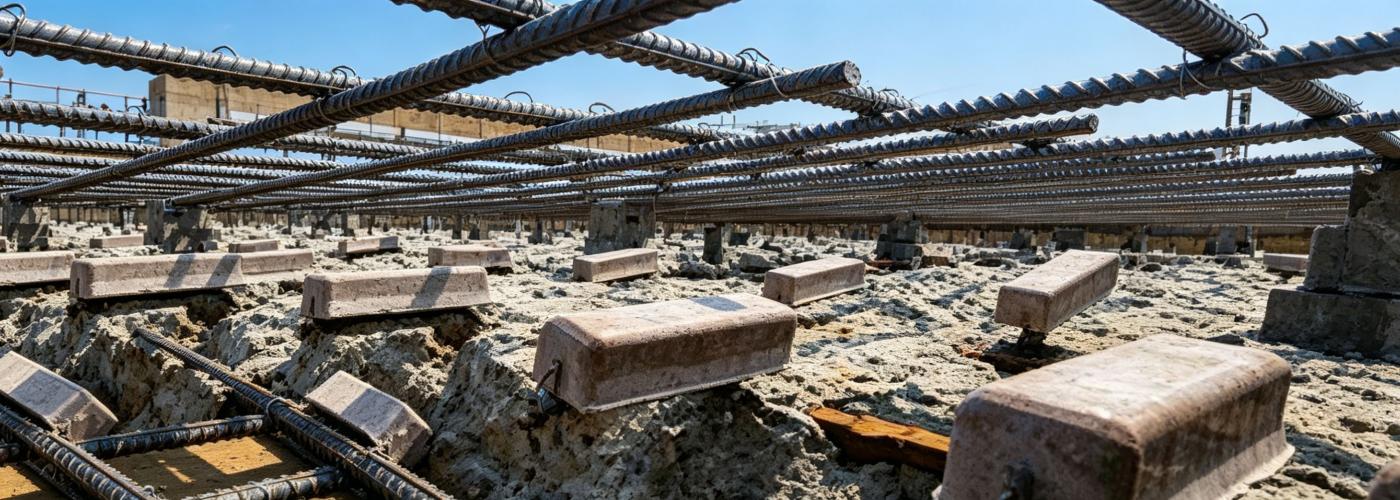
Concrete Cathodic Protection (CP) is currently in a stage characterized by "mature technology coupled with dual upgrades in materials and intelligence." As an active final defense line against chloride-induced corrosion in reinforced concrete, it has evolved from scattered applications on bridge decks and wharves in its early days to large-scale deployment in sea-crossing clusters, utility tunnels, and offshore wind power foundations. However, cost and standards remain two major hurdles for widespread implementation.
The following breakdown covers four key aspects: "Technical Routes → Current Hotspots → Engineering Bottlenecks → Application Boundaries."
I. Division of Labor Between the Two Mainstream Methods in Concrete
The inherently high resistivity of concrete (typically 5–20 kΩ·cm, far higher than soil) dictates that CP application here differs significantly from that for buried pipelines:
-
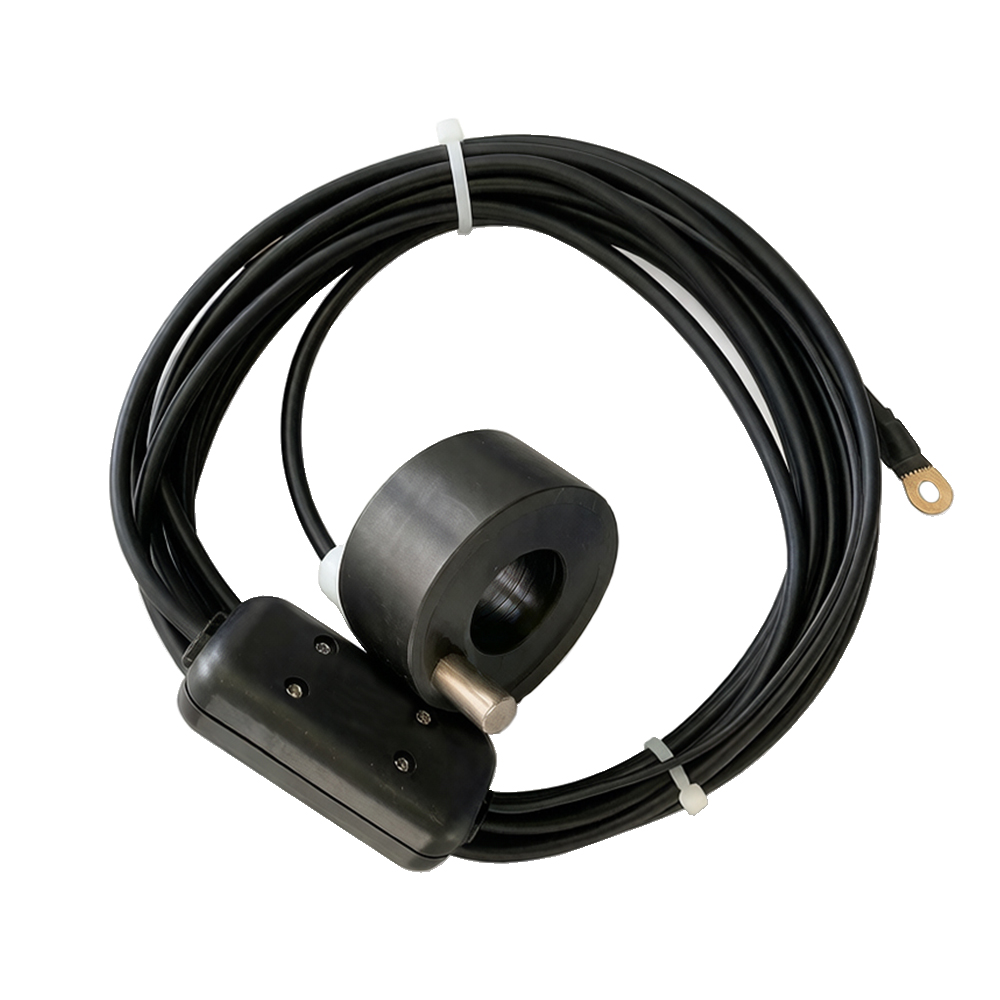
Sacrificial Anode Method (SAP): Zinc alloy/aluminum alloy anodes require no external power source and are maintenance-free. However, their driving voltage is limited. They are better suited for immersion zones, tidal zones, and buried areas where current can be conducted via moisture. The protection radius is 0.5–2 m, with a design life of 5–15 years; anodes need replacement when consumed to 70% of their original size. In recent years, aluminum alloy anodes have shown better performance than traditional zinc in "high-resistivity adaptation," offering higher driving potential and greater capacitance.
-
Impressed Current Cathodic Protection (ICCP): Uses MMO (Mixed Metal Oxide) titanium mesh/strip anodes and potentiostats. It offers strong controllability and is the preferred choice for bridge decks, box girders, main bodies of sea-crossing bridges, and utility tunnels. Current density typically ranges from 0.05–0.2 mA/m², maintaining rebar potential at -850 ~ -1200 mV (CSE). The downside is that initial investment accounts for 5–10% of the structure's cost, requiring professional design and construction.
💡 An intermediate route gaining popularity is Hybrid CP: During the polarization phase (1–2 years), ICCP is used to quickly bring the rebar to the protective potential, after which the system switches to sacrificial anodes for long-term maintenance. This eliminates the need for continuous external power and reduces operation and maintenance burdens, making it suitable for mega-projects requiring "century-long service life."
II. Four Research Hotspots (2024–2026)
1. Anode Material Upgrades
-
MMO Titanium-Based: Ternary Ru-Ir-Ti coatings are replacing traditional binary ones, increasing activity by +30%, extending lifespan to 50+ years, and reducing energy consumption by -20%. Ultra-thin titanium strips (0.1–0.3 mm) offer good flexibility for curved surfaces.
-
Conductive Polymer Anodes: Sprayed or pasted polyaniline or polypyrrole provides uniform current distribution, with a lifespan of 15–20 years, suitable for large flat areas.
-
Carbon Fiber Composite Anodes: Woven mesh impregnated with conductive resin, can be pre-embedded, with a lifespan of 30+ years.
-
Aluminum Alloy Sacrificial Anodes are gradually replacing zinc in some applications to address the historical issue of "insufficient driving force" in high-resistivity concrete.
2. Hybrid Protection Systems (CP + X)
Single CP cannot fully handle extreme environments; combined approaches are now common:
-
CP + Corrosion Inhibitors (e.g., calcium nitrite/organic amines): Inhibitors form a passive film on the rebar surface, while CP stabilizes this film and reduces current demand.
-
CP + Surface Coatings (epoxy/polyurethane/fluorocarbon): Reduces resistivity and improves current efficiency, friendly for saline spray zones and industrial areas.
-
The "Coating-CP Compatible High-Conductivity Coating" developed by Ningbo Institute of Materials addresses the "shielding effect" of traditional insulating coatings.
3. Intelligence / Digital Twins
This is the fastest-changing direction in the past two years:
-
Embedded Ag/AgCl or smart reference electrodes linked with potentiostats automatically stabilize potential within -0.85 ~ -1.1 V (CSE).
-
Wireless sensors + IoT + AI adaptive control shift the paradigm from "manual inspection" to "remote sensing + predictive maintenance."
-
The "Smart Sensing and Deterioration Early Warning System for Full-Life Performance" developed by Wang Penggang's team at Qingdao University of Technology won a Silver Medal at the 2024 Geneva Invention Exhibition; it tracks the internal micro-environment of concrete and the spatiotemporal points of rebar depassivation in real-time.
4. Two Cutting-Edge New Directions
-
Photoelectric Cathodic Protection: A Z-scheme heterojunction photoanode developed by Jin Zuquan's team at Qingdao University of Technology won a Gold Medal at the 2024 Geneva Invention Exhibition—using solar energy to drive auxiliary CP, solving the pain point of "remote offshore structures without power supply."
-
Nanocomposite Cement-Based Thermoelectric Self-Powered Systems: Published in Acta Materiae Compositae Sinicain 2024 by Beihang University & Qingdao University of Technology, this approach uses the temperature difference between day and night in marine structures to generate electricity for self-sufficient CP current.
III. Where Engineering Implementation Still Faces Challenges
|
Challenge Point |
Specific Manifestation |
|---|---|
|
High Resistivity of Concrete |
When >5 kΩ·cm, sacrificial anodes lack driving force; ICCP also requires conductive mortar/coatings to reduce resistance. |
|
Potential Anomalies & Non-Uniform Current |
Improper installation of reference electrodes, corroded/disconnected wires, and unreasonable anode spacing can all lead to localized failure to meet standards. |
|
"Acid Attack" in Early Systems |
First-generation CP on bridge decks in the 1950s failed due to acid production near anodes. Even modern MMO requires strict control of anode/concrete current density. |
|
Relatively High Initial Investment |
ICCP accounts for 5–10% of construction cost, leading to hesitant decision-making by owners. |
|
Lagging Standards/Talent |
The national standard system is still being completed; sea-crossing clusters rely on project-level specifications for promotion, and there is a gap in specialized talent. |
IV. Application Scenarios Have Expanded Beyond "Bridges + Wharves"
-
Sea-Crossing Clusters: Hong Kong-Zhuhai-Macau Bridge, Shenzhen-Zhongshan Link—large-scale ICCP covers bridges, tunnels, artificial islands, and pipe joint sections, targeting century-long durability.
-
Underground Utility Tunnels: Pre-embedded carbon fiber anodes + wireless monitoring for environments with triple corrosion threats: humidity, high chlorides, and stray currents.
-
Offshore Wind Power / Photovoltaic Foundations: Hybrid anodes + green power sources (PV direct supply) adapted for remote, grid-less scenarios.
-
Existing Bridge Repair: TRC (Textile-Reinforced Concrete) wrapping in the tidal zone + 90-day cathodic protection. Experiments by Hohai University in 2025 showed a 300–548% increase in charge transfer resistance.