


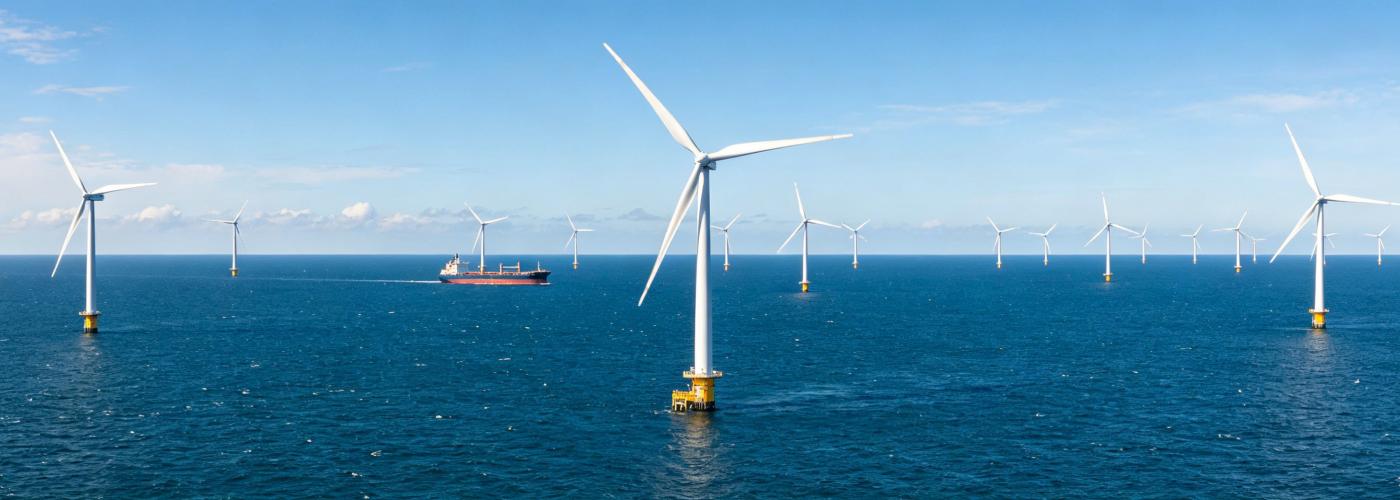
As the global energy transition accelerates, offshore wind power has become a cornerstone of the new energy landscape. Serving as the "anchor" supporting hundred-meter-high towers and giant turbines, offshore wind monopile foundations endure the relentless erosion of a complex marine environment. Particularly in the tidal splash zone—where oxygen is abundant, wet-dry cycles are constant, and salt accumulates—corrosion becomes most severe. Equipping these underwater giants with effective "armor" is a critical challenge that the offshore wind industry must overcome.
I. Current Status: Constructing Multi-Layer Defense Systems
Currently, the anti-corrosion strategy for offshore wind monopiles relies on a dual defense line: "passive coatings + active cathodic protection."
In terms of passive defense, ultra-durable heavy-duty anti-corrosion coatings are the first choice. Before leaving the factory, monopiles undergo "sandwich-style" painting: an epoxy zinc-rich primer at the bottom utilizes the cathodic protection effect of zinc powder for chemical rust prevention; a thick-film epoxy paint in the middle provides physical shielding with its density; and a topcoat of highly weather-resistant polyurethane or polysiloxane resists UV radiation and wave erosion. Addressing the vulnerability of the splash zone, the industry is increasingly adopting mechanical cladding using Monel alloy (copper-nickel alloy) or high-performance corrosion-resistant composites (FRP) to physically isolate the steel from seawater contact.
In terms of active defense, Impressed Current Cathodic Protection (ICCP) is gradually replacing the traditional sacrificial anode method. Due to the massive surface area of monopiles, traditional zinc or aluminum blocks (sacrificial anodes) often fail to meet the protection requirements for a 25-year or even longer full lifecycle, and their installation is labor-intensive. Modern wind farms prefer installing ICC systems inside the piles. Using Mixed Metal Oxide (MMO) anode ribbons, these systems continuously apply protective current to the pile, stabilizing the steel's potential within the anti-corrosion range.
II. Pain Points and Challenges
Despite technological maturity, significant pain points remain. First is the difficulty of maintenance; once a turbine is operational, inspecting submerged pile foundations requires professional diving operations or ROVs (Remotely Operated Vehicles), which are costly and high-risk. Second is Microbiologically Influenced Corrosion (MIC); near the seabed mudline, microbial films (such as sulfate-reducing bacteria) accelerate steel corrosion, against which traditional coatings are less effective. Additionally, as the industry moves toward deeper waters, more complex geological structures and harsher sea conditions pose new challenges to the adhesion and fatigue resistance of anti-corrosion materials.
III. Outlook: Intelligence and Ecological Design
Looking ahead, anti-corrosion for offshore wind monopiles will evolve toward "intelligence" and "ecological design."
First, intelligent monitoring and big data early warning. Future wind monopiles will embed distributed fiber Bragg grating sensors and wireless potential probes. Rather than relying solely on periodic inspections, these systems will provide real-time feedback on corrosion rates and potential data. Combined with AI algorithms, backend systems will accurately predict remaining service life and automatically adjust the output current of the ICCP system, achieving "protection on demand."
Second, green, long-life materials. Solvent-free, low-VOC water-based environmental coatings will become mandatory standards. Simultaneously, bionic self-healing coating technology represents the next frontier—when the coating is scratched, microcapsules of repair agents inside will automatically release and cure, healing the wound like human skin. Furthermore, for deep-sea floating wind power, anti-corrosion design will shift from mere "corrosion resistance" to "environmental utilization," such as developing low-surface-energy antifouling coatings that coexist symbiotically with marine organisms.
Conclusion
Anti-corrosion for offshore wind monopiles is a protracted battle against time. From simple material stacking to digital precision management, technological innovation is enabling these steel behemoths to achieve a "zero-corrosion" century-long guardianship amidst the raging waves.